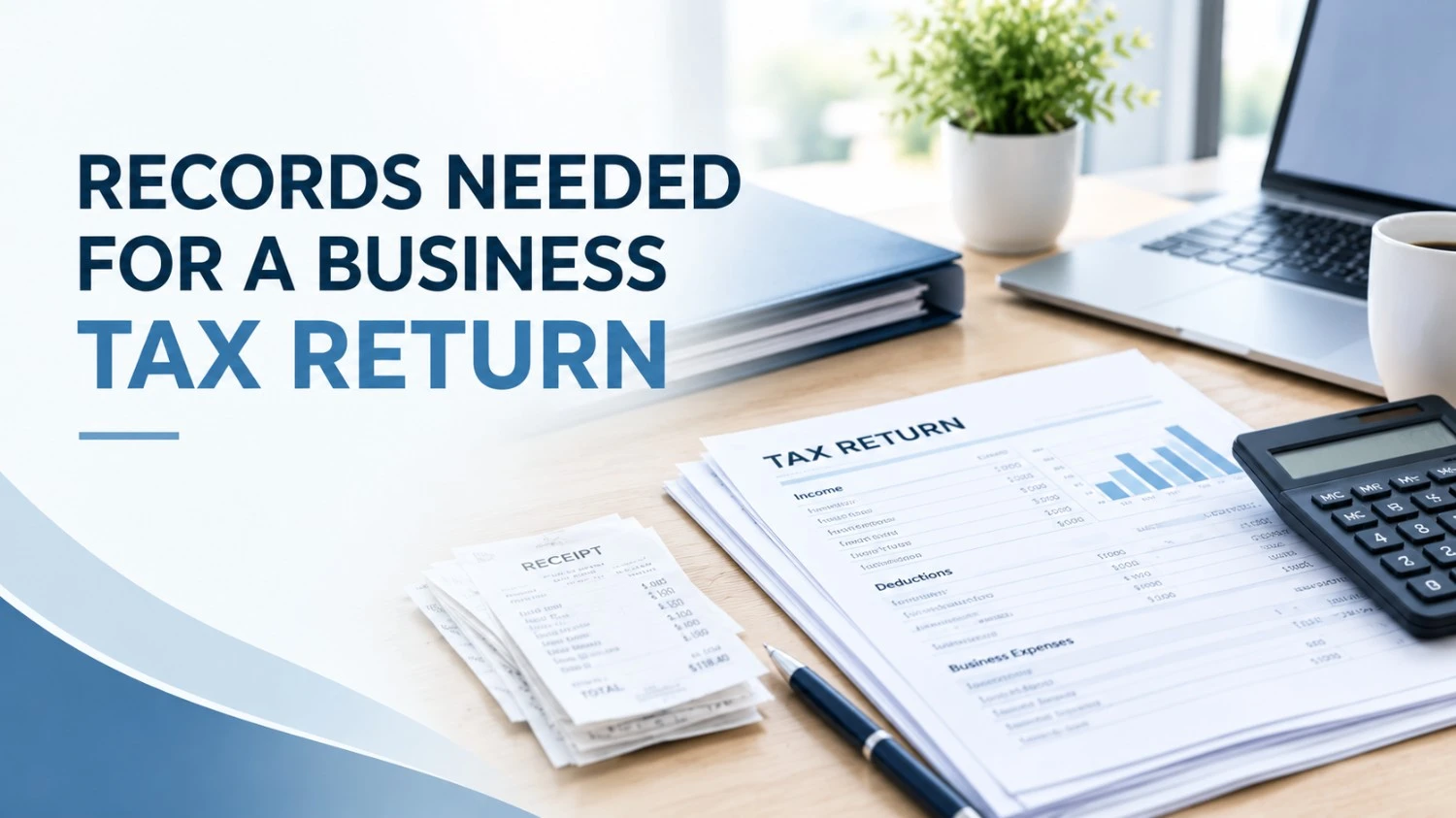
What Records Do You Need for a Business Tax Return?

• October 23, 2026

Featured Image

Preparing a business tax return is much easier when your financial records are complete, accurate and organised.

For many small business owners, the challenge is not the tax return itself. It is gathering the right documents, checking that income and expenses are correctly recorded, and making sure there is enough information to support the figures being reported.

So, what records do you need for a business tax return?

The exact requirements depend on your business structure, industry and circumstances, but most businesses should maintain clear records of income, expenses, assets, liabilities, payroll and other transactions throughout the financial year.

Good record keeping can also support tax planning, cash flow management and better business decisions.

1. Business Income Records

One of the first things you will need is a complete record of the income your business earned during the financial year.

This may include:

  • Sales invoices
  • Receipts
  • Online payment records
  • Bank deposits
  • Merchant facility statements
  • E-commerce platform reports
  • Other business income
  • Interest or investment income related to the business

If your business receives income through several channels, record each source accurately and reconcile it against your accounting records.

For example, income may arrive through direct bank transfers, card payments, online platforms and cash transactions. These records should align with your accounting system and bank statements.

2. Business Expense Records

Business expenses are another major part of the tax return process.

Keep records for expenses that relate to running the business, such as:

  • Rent
  • Utilities
  • Software subscriptions
  • Advertising and marketing
  • Insurance
  • Professional fees
  • Office expenses
  • Travel
  • Motor vehicle costs
  • Equipment
  • Staff costs
  • Contractor payments

Invoices and receipts should clearly show what was purchased, when it was purchased and the amount paid.

Not every expense is automatically deductible, and some expenses may need to be apportioned between business and private use.

Keeping detailed records gives your accountant more information to determine the correct tax treatment.

3. Bank and Credit Card Statements

Bank statements are essential because they provide an independent record of money moving in and out of the business.

You should generally retain statements for:

  • Business bank accounts
  • Business credit cards
  • Loan accounts
  • Savings accounts used by the business
  • Payment platforms where relevant

These statements are often used to reconcile transactions recorded in accounting software.

If business and personal transactions are mixed together, tax preparation can become much more time-consuming.

Using dedicated business accounts can make record keeping clearer and reduce the amount of manual checking required.

4. Payroll and Employee Records

If your business employs staff, payroll records are an important part of your tax and reporting obligations.

Relevant records may include:

  • Employee wages
  • PAYG withholding information
  • Superannuation payments
  • Leave records
  • Payroll reports
  • Bonuses
  • Allowances
  • Employment-related reimbursements

It is important that payroll records match the amounts actually paid through your bank accounts.

Businesses should also keep appropriate records relating to superannuation obligations and employee entitlements.

Accurate payroll records can help identify discrepancies before the tax return is prepared.

5. Contractor and Supplier Records

If you use contractors or external suppliers, retain invoices and payment records for those services.

This is especially important when contractors make up a significant part of your operating costs.

You may also need to retain records for contractor reporting obligations, depending on the services provided and your business’s circumstances.

Keeping clear contractor records helps distinguish between employee costs, supplier expenses and outsourced services.

6. Asset Purchase Records

If your business purchased equipment, vehicles, computers, machinery or other assets, keep the original purchase documentation.

Useful records include:

  • Supplier invoices
  • Purchase contracts
  • Finance agreements
  • Settlement documents
  • Installation costs
  • Disposal records for sold assets

The tax treatment of an asset may differ from an ordinary operating expense.

Some assets may be depreciated over time, while others may qualify for different treatment depending on current tax rules and the circumstances of the business.

Accurate purchase records help determine the correct treatment.

7. Loan and Finance Documents

Businesses should keep records of loans, finance agreements and other liabilities.

This can include:

  • Business loan statements
  • Equipment finance agreements
  • Hire purchase documents
  • Interest statements
  • Repayment schedules
  • Loan establishment documents

The distinction between principal repayments and interest is important because they are treated differently for accounting and tax purposes.

Keeping these records organised can also help ensure the balance sheet accurately reflects what the business owes.

8. GST and BAS Records

If your business is registered for GST, keep records that support the figures reported in your Business Activity Statements.

These may include:

  • Sales records
  • Purchase invoices
  • GST reports
  • BAS lodgement records
  • Adjustments
  • Credit notes

Ideally, the figures reported throughout the year should reconcile with the accounting records used to prepare the annual tax return.

Regular reconciliations can make year-end tax preparation much easier.

9. Stock and Inventory Records

Businesses that hold trading stock may need accurate inventory records at year end.

These records can include:

  • Opening stock
  • Purchases
  • Sales
  • Damaged or obsolete stock
  • Stock adjustments
  • Closing stock

Inventory values can affect taxable income, so incomplete stock records can create problems when preparing financial statements and tax returns.

A proper stocktake at the end of the financial year may be required depending on the business.

10. Motor Vehicle and Travel Records

If you claim deductions for business-related vehicle or travel expenses, you may need supporting records such as logbooks, receipts and travel documentation.

Depending on the method used, this could include:

  • Logbooks
  • Fuel receipts
  • Registration
  • Insurance
  • Servicing costs
  • Travel itineraries
  • Accommodation invoices
  • Parking and toll records

Where expenses have both business and private use, accurate records can help determine the appropriate business portion.

11. Home Office Records

If part of your home is used for business purposes, keep records of relevant expenses.

These may include electricity, internet, phone costs, office equipment and other eligible expenses.

The method used to calculate a deduction can affect what documentation needs to be retained.

Rather than estimating these costs at tax time, keeping records throughout the year usually provides a more reliable result.

12. Previous Tax Returns and Financial Statements

Previous tax returns, financial statements and supporting schedules can also be useful.

They provide context for:

  • Asset balances
  • Depreciation schedules
  • Carried-forward losses
  • Loan balances
  • Previous deductions
  • Business structure information

These documents can be particularly important if you change accountants or if the business has grown more complex.

Why Good Record Keeping Matters Beyond Tax

Keeping accurate records is not only about compliance.

Reliable financial data can help business owners understand:

  • Profitability
  • Cash flow
  • Margins
  • Cost increases
  • Tax obligations
  • Debt levels
  • Business performance

When records are incomplete, decision-making becomes harder because the numbers may not reflect what is actually happening in the business.

Strong record keeping can also help identify issues earlier, rather than leaving them until the tax return is due.

Make Tax Time Easier With Better Systems

Preparing a business tax return should not require rebuilding an entire year of financial activity from scratch.

Cloud accounting software, regular bank reconciliations, digital receipt storage and consistent bookkeeping processes can make tax preparation much more efficient.

W Advisory works with business owners to improve financial systems, reporting and year-end preparation, helping them better understand their tax obligations and business performance.

If your records are difficult to manage or you want to improve the way your financial information is organised, [talk to W Advisory about your business accounting and tax requirements].

Frequently Asked Questions

What records are required for a business tax return?

Most businesses need records of income, expenses, bank transactions, payroll, assets, loans, GST, inventory and other relevant financial activity. The exact requirements depend on the business structure and circumstances.

Do I need to keep every business receipt?

You should retain appropriate evidence for business expenses you intend to claim. This may include receipts, invoices, bank records and other supporting documentation.

Can bank statements be used instead of receipts?

Bank statements can help show that a payment was made, but they may not always provide enough detail to establish what the expense was for. Invoices or receipts are generally more useful supporting records.

How long should business tax records be kept?

Record-retention periods vary depending on the type of record and relevant tax or legal requirements. Businesses should confirm current requirements with their accountant or the appropriate authority.

What happens if my business records are incomplete?

Incomplete records can make tax preparation more difficult and may limit the ability to substantiate certain figures or deductions. It is usually better to address missing information before the return is prepared.

Disclaimer

This information is general in nature and does not constitute tax, accounting, legal or financial advice. Record-keeping requirements and tax treatment can vary depending on business structure, industry and individual circumstances. Speak with W Advisory or an appropriately qualified adviser about your specific obligations.

Other Blogs

increase small business costs

How Compliance Requirements Can Increase Small Business Costs

Running a small business involves more than delivering products or services and generating revenue. Business owners also need to manage a growing list of compliance obligations, from tax and payroll requirements to workplace rules, record keeping, insurance and industry-specific regulations. Individually, many of these requirements may appear manageable. Together, however, they can create a significant …

tradie accountant NSW

Why You Need a Specialised Tradie Accountant in NSW

Running a trade business involves much more than completing jobs and sending invoices. Between quoting, purchasing materials, managing subcontractors or employees, keeping equipment on the road, following up payments and finding the next job, financial administration can easily get pushed down the priority list. But overlooking the numbers can create problems. Tax obligations, inconsistent cash …

registered tax agent

Why Hiring a Registered Tax Agent Can Save You Money and Prevent Costly Tax Errors

Tax isn’t simply about lodging a return at the end of the financial year. For individuals and businesses, it can involve understanding changing tax rules, keeping appropriate records, identifying legitimate deductions and ensuring information is reported correctly and on time. Trying to manage everything yourself may appear to save money initially. However, overlooked deductions, incorrect …

Featured Image
We will help business owners and
professionals overcome the burden of
poor tax advice, and inefficient structures

by delivering tailored strategies
that are compliant, minimise tax
and are structured to create
generational wealth.

Call Us Book Free Consultation