...

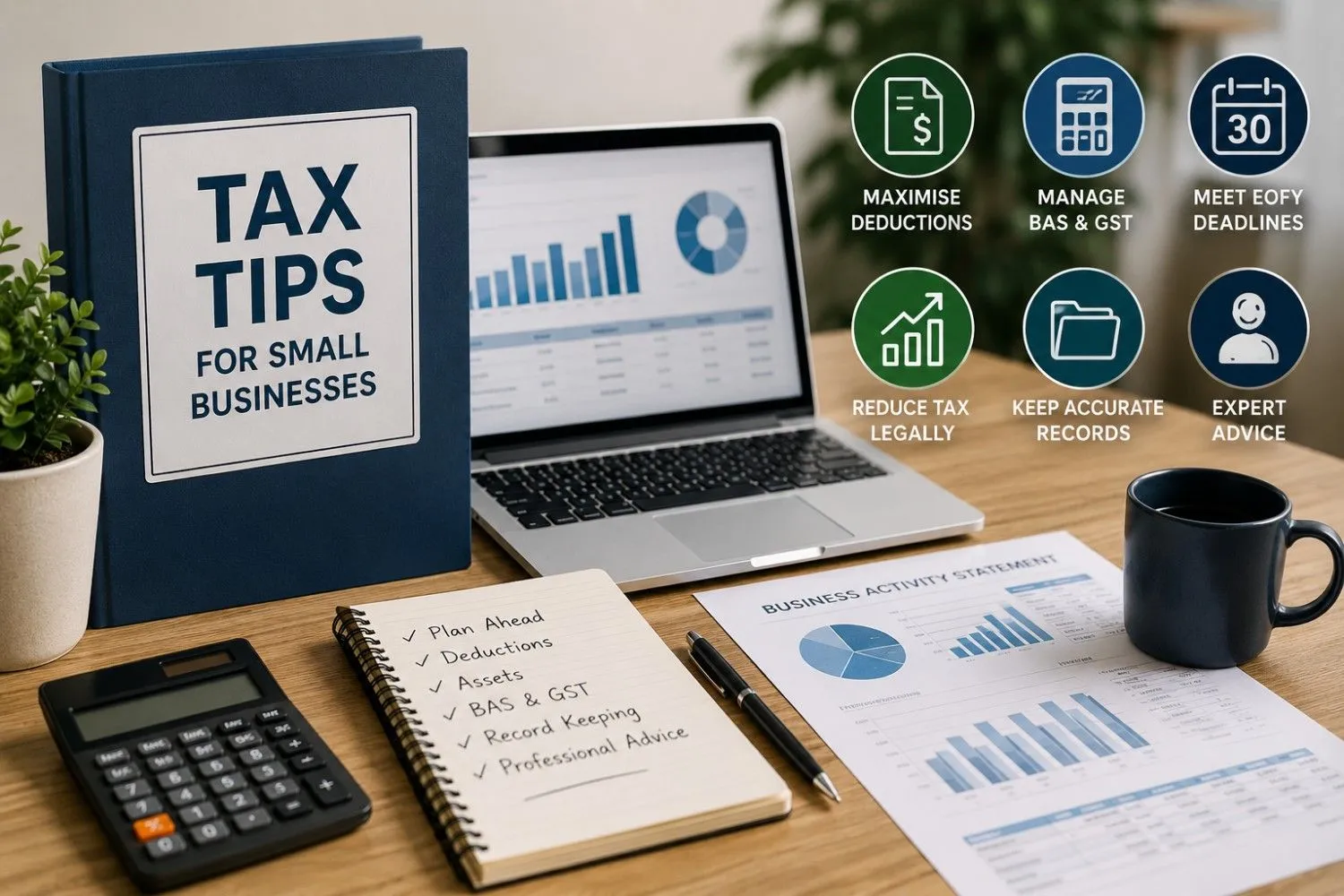
10 Smart Tax Tips for Small Businesses in Australia (2026 Guide)

• May 19, 2026

Featured Image

Running a small business in Australia means juggling multiple responsibilities — managing cash flow, growing revenue, handling employees, and staying compliant with tax obligations. Yet one area many business owners leave until the last minute is tax planning.

The reality is that effective tax management is not just about lodging returns at the end of the financial year. It is about making smarter financial decisions throughout the year to legally reduce tax, improve cash flow, and avoid unnecessary penalties.

At W Advisory, we work closely with Australian small businesses to help them stay compliant while identifying practical opportunities to improve financial outcomes. Whether you are a sole trader, partnership, trust, or company, these tax strategies can help you better prepare for EOFY and strengthen your business finances year-round.

Why Tax Planning Matters for Small Businesses

Many business owners only focus on tax when the deadline approaches. However, proactive tax planning can help you:

  • Reduce taxable income legally
  • Improve cash flow management
  • Avoid ATO penalties and interest
  • Maximise eligible deductions
  • Make better investment decisions
  • Prepare for future business growth

Good bookkeeping and regular financial reviews are the foundation of effective tax planning. Without accurate records, even legitimate deductions can become difficult to claim.

1. Understand Your Business Tax Obligations Early

One of the biggest causes of tax problems for small businesses is misunderstanding obligations.

Your tax responsibilities depend heavily on your business structure.

Sole Traders

If you operate as a sole trader, business income is included in your personal tax return. You pay tax at individual marginal tax rates, and your total taxable income may also include:

  • Medicare levy
  • HECS/HELP repayments
  • Investment income
  • Other employment income

Companies

Companies are taxed separately from individuals. Eligible base rate entities currently pay a reduced company tax rate of 25%, while other companies generally pay 30%.

Other Common Tax Obligations

Depending on your business activities, you may also need to manage:

  • Goods and Services Tax (GST)
  • PAYG withholding
  • PAYG instalments
  • Superannuation obligations
  • Fringe Benefits Tax (FBT)
  • Payroll tax (state-based)

Failing to understand these requirements early can result in penalties, missed lodgements, or cash flow stress later.

Expert Tip

Schedule quarterly financial reviews instead of waiting until EOFY. This helps identify tax issues before they become expensive problems.

2. Keep Accurate Financial Records All Year

Accurate bookkeeping is one of the most overlooked tax-saving tools.

The Australian Taxation Office (ATO) requires businesses to keep records for at least five years. Poor record-keeping can lead to:

  • Missed deductions
  • Incorrect BAS reporting
  • Cash flow problems
  • Audit risks
  • Compliance penalties

Essential Records Every Business Should Maintain

  • Tax invoices and receipts
  • Bank statements
  • Payroll records
  • Superannuation payments
  • Vehicle logbooks
  • Asset purchase records
  • Loan agreements
  • Contractor payments
  • Digital accounting reports

Cloud accounting software such as Xero, MYOB, or QuickBooks can significantly improve accuracy and reduce manual errors.

Why This Matters for Tax Savings

When your records are organised, your accountant can identify deductions and tax strategies more effectively. Businesses with poor bookkeeping often miss legitimate claims simply because supporting documents are unavailable.

3. Claim Every Business Tax Deduction You Are Entitled To

Many small businesses pay more tax than necessary because they fail to claim eligible deductions.

A tax deduction reduces your taxable income, which directly lowers the amount of tax you pay.

Common Small Business Tax Deductions

Australian businesses may be able to claim deductions for:

  • Rent and utilities
  • Employee wages and super
  • Marketing and advertising
  • Insurance premiums
  • Accounting and bookkeeping fees
  • Internet and phone expenses
  • Software subscriptions
  • Office supplies
  • Professional development
  • Business travel
  • Vehicle expenses
  • Equipment and tools

Working From Home Deductions

If you operate your business from home, you may also claim a portion of:

  • Electricity
  • Internet
  • Phone expenses
  • Office furniture
  • Occupancy costs (in limited situations)

The ATO allows both fixed-rate and actual-cost methods depending on eligibility.

Important Reminder

Every deduction must be directly related to earning business income and supported by evidence.

Always keep:

  • Receipts
  • Tax invoices
  • Digital transaction records
  • Mileage logs
  • Bank statements

4. Use the Instant Asset Write-Off Strategically

The instant asset write-off remains one of the most valuable tax concessions for Australian small businesses.

Eligible businesses can immediately deduct the business portion of assets costing below the current threshold instead of depreciating them over multiple years.

What Can Be Claimed?

Eligible assets may include:

  • Laptops and computers
  • Office furniture
  • Tools and machinery
  • Point-of-sale systems
  • Work vehicles
  • Business equipment

Key Rules to Remember

  • The asset must be installed and ready for use before 30 June
  • The threshold applies per asset
  • Both new and second-hand assets may qualify
  • Vehicle claims may be subject to car limit rules

Smart Tax Planning Strategy

Do not buy assets purely for tax reasons. Purchases should still make commercial sense for your business operations and cash flow.

At W Advisory, we often help clients assess whether bringing forward planned purchases before EOFY can provide meaningful tax advantages.

5. Stay Ahead of BAS and GST Deadlines

Business Activity Statement (BAS) obligations are one of the most common stress points for small business owners.

Your BAS may include reporting for:

  • GST
  • PAYG withholding
  • PAYG instalments

Missing BAS deadlines can trigger:

  • General interest charges
  • Failure-to-lodge penalties
  • Cash flow pressure

Practical BAS Tips for Small Businesses

Reconcile Accounts Monthly

Waiting until BAS due dates often creates errors and unnecessary stress.

Separate Tax Savings

Many businesses use a dedicated tax savings account to set aside GST and PAYG obligations progressively.

Use Digital Accounting Software

Automated GST coding reduces errors and simplifies BAS preparation.

Work With a Registered BAS Agent

Professional support can improve compliance accuracy and may provide extended lodgement deadlines.

6. Review Your Business Structure Regularly

As your business grows, your original structure may no longer be tax efficient.

A structure that worked during startup may expose you to:

  • Higher tax rates
  • Asset protection risks
  • Poor succession planning
  • Limited growth flexibility

Common Business Structures in Australia

  • Sole trader
  • Partnership
  • Company
  • Trust structure

Each structure has different:

  • Tax rates
  • Compliance obligations
  • Asset protection benefits
  • Profit distribution options

When to Review Your Structure

You should review your business structure if:

  • Revenue has significantly increased
  • You are hiring staff
  • You are investing in assets
  • You want to protect personal assets
  • You are expanding operations

Professional tax advice is essential before making structural changes.

7. Plan for Superannuation Contributions

Superannuation can be both a retirement strategy and a tax planning opportunity.

Employer super contributions are generally tax deductible when paid correctly and before deadlines.

Why Timing Matters

To claim deductions in the current financial year:

  • Contributions must be received by the super fund before 30 June
  • Processing delays can impact deductibility

Additional Super Strategies

Depending on your circumstances, you may also benefit from:

  • Personal concessional contributions
  • Carry-forward concessional contributions
  • Spouse contribution strategies

Superannuation rules can change regularly, so personalised advice is important.

8. Monitor Cash Flow Alongside Tax Planning

Tax planning and cash flow management go hand in hand.

Many profitable businesses still experience financial stress because they fail to plan for tax liabilities throughout the year.

Common Cash Flow Mistakes

  • Spending GST collections
  • Underestimating PAYG instalments
  • Ignoring super obligations
  • Failing to forecast seasonal downturns

Practical Cash Flow Tips

  • Review financial reports monthly
  • Create quarterly tax forecasts
  • Maintain emergency reserves
  • Separate operating and tax funds

Good forecasting allows businesses to prepare for obligations instead of reacting to unexpected bills.

9. Prepare Early for EOFY

The businesses with the smoothest EOFY process are usually the ones preparing months in advance.

EOFY Checklist for Small Businesses

Before 30 June, review:

  • Outstanding invoices
  • Bad debts
  • Asset purchases
  • Payroll reconciliations
  • Super payments
  • Stocktake requirements
  • Vehicle logbooks
  • Trust distribution resolutions
  • Director loan accounts

EOFY preparation is not just about compliance; it is an opportunity to improve tax outcomes legally and strategically.

10. Work With Trusted Tax Professionals

Tax legislation changes regularly, and generic online advice may not suit your specific business circumstances.

Working with experienced advisors can help you:

  • Stay compliant
  • Identify tax-saving opportunities
  • Improve reporting accuracy
  • Reduce audit risks
  • Plan for future growth

At W Advisory, we support Australian businesses with proactive accounting, bookkeeping, tax planning, BAS management, and strategic financial guidance tailored to business goals.

Our focus is not only on compliance but also on helping businesses make informed financial decisions throughout the year.

Final Thoughts

Smart tax planning is not about avoiding tax; it is about understanding the rules, staying compliant, and making informed decisions that support long-term business growth.

The earlier you start preparing, the more opportunities you have to improve your tax position legally and effectively.

Whether you are approaching EOFY or simply want better visibility over your business finances, having the right accounting and advisory support can make a significant difference.

If you want personalised tax and business advice tailored to your situation, W Advisory can help you navigate compliance while identifying opportunities to strengthen your financial position.

Frequently Asked Questions (FAQ)

What is the best tax strategy for small businesses in Australia?

The best strategy depends on your business structure, income, expenses, and long-term goals. Common strategies include maximising deductions, using the instant asset write-off, improving bookkeeping, and proactive tax planning.

Can small businesses claim home office expenses?

Yes. Eligible businesses operating from home may claim certain running expenses using either the fixed-rate or actual-cost method.

What happens if I miss a BAS deadline?

The ATO may apply penalties and interest charges. Repeated late lodgements can also increase compliance scrutiny.

How long should business tax records be kept?

The ATO generally requires businesses to retain records for at least five years.

Is professional bookkeeping worth it for small businesses?

Yes. Accurate bookkeeping improves compliance, cash flow visibility, BAS accuracy, and helps identify tax-saving opportunities.

Disclaimer

The information provided in this article is general in nature and does not constitute financial, taxation, or legal advice. Tax laws and thresholds may change, and individual circumstances vary. You should seek professional advice from a qualified accountant, registered tax agent, or financial advisor before making business or taxation decisions. W Advisory accepts no liability for reliance on this information without obtaining personalised professional advice.

Other Blogs

biggest risk for bookkeepers

The Biggest Risk for Bookkeepers in 2026

The role of bookkeepers is evolving rapidly. With advancements in technology, changing compliance requirements, and increasing client expectations, the profession is facing new challenges. Today, many professionals are asking about the biggest risks for bookkeepers in 2026 and how to stay relevant in a competitive market. From our experience at W Advisory, the biggest concern …

Why-Do-You-Need-a-Bookkeeper

Why Do You Need a Bookkeeper

Managing finances is one of the most critical aspects of running a business. Whether you are a sole trader or a growing company, understanding why you need a bookkeeper is essential for long-term success. Many business owners underestimate the importance of bookkeeping until problems arise. From our experience at W Advisory, businesses that invest in …

Featured Image
We will help business owners and
professionals overcome the burden of
poor tax advice, and inefficient structures

by delivering tailored strategies
that are compliant, minimise tax
and are structured to create
generational wealth.

Seraphinite AcceleratorOptimized by Seraphinite Accelerator
Turns on site high speed to be attractive for people and search engines.