...

Why Tax Planning Is Now More Important Than Tax Returns

• April 21, 2026

Featured Image

For many business owners, tax has traditionally been something you deal with once a year—lodging your return, paying what’s due, and moving on. But in today’s financial landscape, that approach is no longer enough.

The focus is shifting from tax returns to tax planning—and for good reason.

Tax returns are about reporting the past. Tax planning is about shaping the future. Businesses across Australia, especially in major hubs like Sydney and across NSW, are realising that proactive tax strategies can significantly improve profitability and long-term financial outcomes.

At W Advisory, we help businesses move beyond compliance and towards smarter, forward-thinking tax strategies.

What Is Tax Planning?

Tax planning is the process of organising your financial affairs in a way that legally minimises your tax liability while aligning with your business and financial goals.

It involves:

  • Timing income and expenses
  • Structuring your business effectively
  • Taking advantage of available deductions and concessions
  • Planning investments and asset purchases strategically

Unlike tax returns, which look backwards, tax planning is ongoing and proactive.

What Is the Purpose of Tax Planning?

If you’re wondering, what is the purpose of tax planning?—the answer is simple:

To ensure you pay the right amount of tax, not more than necessary, while staying fully compliant with regulations.

The most appropriate objective of tax planning is:

  • Minimising tax legally
  • Improving cash flow
  • Supporting business growth
  • Avoiding unexpected tax liabilities

Tax planning is not about avoiding tax—it’s about managing it efficiently.

What Is the Goal of Tax Planning?

The goal of tax planning is often misunderstood.

It is not just to minimise taxes—it is to:

  • Optimise your overall financial position
  • Align tax strategies with your business goals
  • Ensure sustainability and long-term growth

In many cases, paying slightly more tax in the short term can lead to greater financial benefits in the long run.

Difference Between Tax Management and Tax Planning

A common question is: What is the difference between tax management and tax planning?

Tax Management:

  • Focuses on compliance
  • Ensures returns are filed correctly and on time
  • Deals with past financial data

Tax Planning:

  • Focuses on strategy
  • Looks ahead to reduce future tax liabilities
  • Involves proactive decision-making

In simple terms:

  • Tax management is reactive
  • Tax planning is proactive

Both are important, but tax planning delivers greater long-term value.

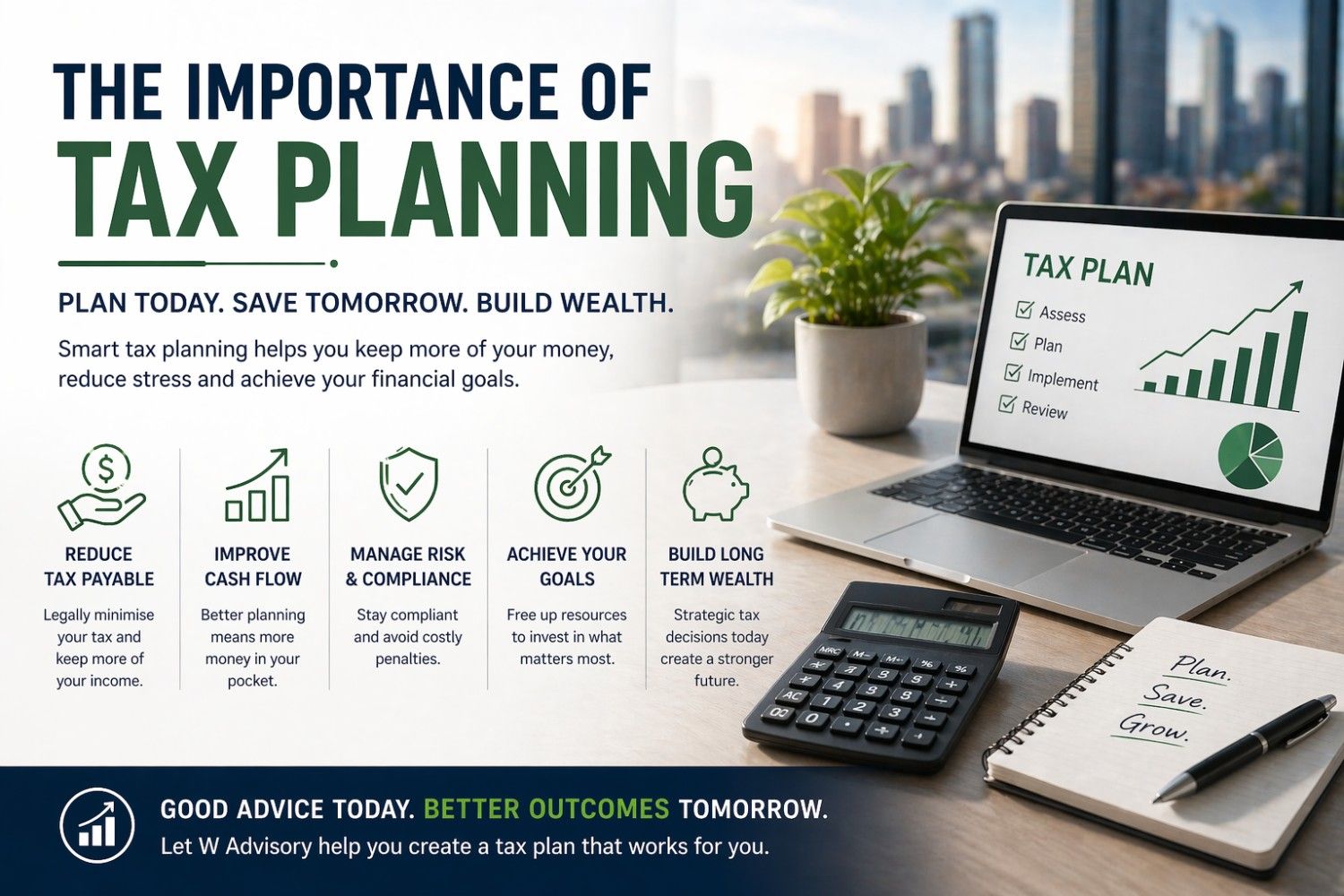
Why Tax Planning Is Important for Your Business

Understanding the importance of tax planning is essential for any business aiming to grow and remain financially stable.

1. Improves Cash Flow

Effective tax planning helps you retain more working capital, which can be reinvested into your business.

2. Reduces Tax Liability

By using available deductions, offsets, and structures, you can legally minimise the amount of tax you pay.

3. Supports Better Decision-Making

With a clear tax strategy, you can make informed decisions about:

  • Investments
  • Hiring
  • Expansion

4. Avoids Last-Minute Stress

Instead of scrambling at tax time, planning ensures everything is structured in advance.

5. Ensures Compliance

Proactive planning helps you stay aligned with ATO regulations and avoid penalties.

What Are the Components of Tax Planning?

Effective tax planning involves several key components:

1. Income Planning

Managing when and how income is received to optimise tax outcomes.

2. Expense Management

Timing expenses to maximise deductions in the right financial year.

3. Business Structure

Choosing the right structure (sole trader, company, trust) to minimise tax.

4. Investment Strategy

Planning investments in a tax-efficient manner.

5. Superannuation Planning

Using super contributions to reduce taxable income and build long-term wealth.

6. Risk Management

Ensuring compliance and avoiding penalties through proper documentation and reporting.

Why Tax Returns Alone Are Not Enough

Many businesses rely solely on tax returns—but this approach has limitations.

Tax returns:

  • Report what has already happened
  • Offer limited opportunities to reduce tax
  • Are focused on compliance

By the time you lodge your return, most opportunities to reduce tax are already gone.

This is why businesses are shifting towards year-round tax planning.

The Role of a Tax Planning Advisor

Working with a tax planning advisor can make a significant difference in your financial outcomes.

A tax planning advisor helps you:

  • Identify tax-saving opportunities
  • Structure your business efficiently
  • Plan for future financial events
  • Stay compliant with changing regulations

At W Advisory, we work closely with businesses across Sydney and NSW to develop tailored tax strategies that align with their goals.

Common Tax Planning Strategies

Some commonly used tax planning strategies include:

  • Bringing forward expenses before the end of the financial year
  • Deferring income where appropriate
  • Maximising deductions and offsets
  • Structuring income through trusts or companies
  • Contributing to superannuation

These strategies must always be implemented carefully and in line with regulations.

When Should You Start Tax Planning?

The best time to start tax planning is now—not at the end of the financial year.

Ideally, tax planning should be:

  • Ongoing throughout the year
  • Reviewed regularly as your business evolves
  • Adjusted based on financial performance and market conditions

Waiting until tax time limits your ability to take advantage of available opportunities.

Final Thoughts

The shift from tax returns to tax planning reflects a broader change in how businesses approach financial management.

Instead of reacting to tax obligations, businesses are now:

  • Planning ahead
  • Making strategic decisions
  • Optimising their financial outcomes

Understanding the importance of tax planning can help you:

  • Save money
  • Improve cash flow
  • Build a stronger, more sustainable business

Frequently Asked Questions (FAQs)

1. What is tax planning?

Tax planning is the process of organising your financial affairs to legally minimise tax liability while aligning with your business goals.

2. What is the difference between tax management and tax planning?

Tax management focuses on compliance and filing returns, while tax planning focuses on strategies to reduce future tax liabilities.

3. What is the goal of tax planning?

The goal is to optimise your financial position, minimise tax legally, and support long-term business growth.

4. What is the purpose of tax planning?

The purpose is to ensure you pay the correct amount of tax while improving cash flow and financial efficiency.

5. What are the components of tax planning?

Key components include income planning, expense management, business structure, investment strategy, and compliance.

6. Why is tax planning important for your business?

It helps reduce tax liability, improve cash flow, support growth, and ensure compliance with regulations.

7. Do I need a tax planning advisor?

Yes, a tax planning advisor can help you identify opportunities, structure your finances effectively, and stay compliant.

8. When should tax planning be done?

Tax planning should be done throughout the year, not just at tax time, to maximise benefits.

Disclaimer

This content is for general informational purposes only and does not constitute financial, tax, or legal advice. Tax planning strategies depend on individual circumstances, business structure, and current regulations. We recommend consulting a qualified tax professional or advisor before making any financial or tax-related decisions.

Other Blogs

5-Tax-Tips-Small-Businesses-Need-to-Know

10 Smart Tax Tips for Small Businesses in Australia (2026 Guide)

Running a small business in Australia means juggling multiple responsibilities — managing cash flow, growing revenue, handling employees, and staying compliant with tax obligations. Yet one area many business owners leave until the last minute is tax planning. The reality is that effective tax management is not just about lodging returns at the end of …

biggest risk for bookkeepers

The Biggest Risk for Bookkeepers in 2026

The role of bookkeepers is evolving rapidly. With advancements in technology, changing compliance requirements, and increasing client expectations, the profession is facing new challenges. Today, many professionals are asking about the biggest risks for bookkeepers in 2026 and how to stay relevant in a competitive market. From our experience at W Advisory, the biggest concern …

Why-Do-You-Need-a-Bookkeeper

Why Do You Need a Bookkeeper

Managing finances is one of the most critical aspects of running a business. Whether you are a sole trader or a growing company, understanding why you need a bookkeeper is essential for long-term success. Many business owners underestimate the importance of bookkeeping until problems arise. From our experience at W Advisory, businesses that invest in …

Featured Image
We will help business owners and
professionals overcome the burden of
poor tax advice, and inefficient structures

by delivering tailored strategies
that are compliant, minimise tax
and are structured to create
generational wealth.

Seraphinite AcceleratorOptimized by Seraphinite Accelerator
Turns on site high speed to be attractive for people and search engines.