...

Latest Tax Tips & Financial Advice in Australia

• July 22, 2026

Featured Image

Tax time can feel stressful, especially when rules change, business costs increase and personal finances become more complex. Whether you are an employee, business owner, investor, sole trader or professional, the right tax planning can make a meaningful difference to your financial position.

One of the biggest mistakes is leaving tax planning until the last minute. Effective tax planning isn’t about shortcuts or agrresive claims. It is about understanding what you are legally entitled to claim, keeping accurate records, structuring your finances properly and making informed decisions before the end of the financial year.

At W Advisory, we help individuals, professionals and business owners with accounting, bookkeeping, tax advisory and business tax planning services in Australia, with a focus on strategic and affordable tax planning for businesses and professionals.

This guide covers the latest tax tips and financial advice in Australia, including deductions, record keeping, small business tax planning, superannuation, investment income and common mistakes to avoid.

Why Tax Planning Matters More Than Ever

Tax planning is not just about reducing tax. It is about understanding your full financial picture and making decisions that support your goals.

For individuals, this may mean claiming eligible work-related deductions, managing investment income, reviewing super contributions or preparing accurate records.

For business owners, it may involve reviewing expenses, cash flow, asset purchases, payroll, GST, BAS, bookkeeping and business structure.

The Australian Taxation Office provides tax-time toolkits for individuals, investors and small businesses to support better tax conversations and preparation. This highlights how important it is to approach tax time with proper documentation and advice rather than guesswork.

A proactive tax accountant or tax adviser can help you:

  • Understand what deductions may apply
  • Avoid overclaiming or unsupported claims
  • Improve bookkeeping and record keeping
  • Manage BAS, GST and payroll obligations
  • Review your business structure
  • Plan cash flow around tax payments
  • Consider superannuation strategies
  • Prepare for ATO focus areas
  • Make better financial decisions year-round

1. Keep Better Records Throughout the Year

One of the most valuable tax tips is to keep accurate records throughout the year.

Many taxpayers miss deductions because they cannot prove the expense. Others claim expenses incorrectly because they do not have the right evidence.

Good record keeping may include:

  • Receipts and invoices
  • Bank statements
  • Logbooks
  • Work-from-home records
  • Business expense records
  • Motor vehicle records
  • Rental property statements
  • Investment income records
  • Super contribution confirmations
  • Payroll and contractor records
  • BAS and GST records

For small businesses, clean bookkeeping can make tax planning easier, reduce compliance stress and give you better visibility over cash flow.

A simple rule: if you want to claim it, you need to be able to support it.

2. Review Work-Related Deductions Carefully

Work-related deductions are among the the most commonly claimed deductions on Australian tax returns, but they are also closely reviewed.

You may be able to claim work-related expenses if they are directly connected to earning your income, you paid for them yourself, you were not reimbursed and you have records.

Common work-related deductions may include:

  • Work-related travel
  • Uniforms and protective clothing
  • Tools and equipment
  • Professional memberships
  • Training and education
  • Mobile phone and internet use
  • Home office expenses
  • Vehicle expenses, where eligible

However, you should avoid claiming private expenses, unsupported estimates or costs already reimbursed by your employer.

A good tax adviser can help you identify legitimate claims without putting your tax return at unnecessary risk.

3. Understand Work From Home Tax Deductions

Working from home remains common across Australia, especially for professionals, consultants, business owners and hybrid workers.

The ATO allows taxpayers to use either the fixed rate method or actual cost method to work out eligible work-from-home deductions. The ATO’s home office expenses calculator covers the 2013–14 to 2025–26 income years and helps estimate deductions based on the method and rates available at the time of calculation.

Work-from-home expenses may include:

  • Electricity
  • Internet
  • Phone use
  • Stationery
  • Computer equipment
  • Office furniture
  • Repairs and maintenance of work equipment

Under the ATO fixed rate method, some expenses are included in the hourly rate, while certain depreciating assets such as desks, chairs, computers and bookshelves may be claimed separately where eligible.

The best method depends on your records and circumstances. If you work from home regularly, keeping a diary, timesheet or digital record of hours worked can make tax time much easier.

4. Use the $20,000 Instant Asset Write-Off Where Eligible

For small businesses, asset purchases can have tax and cash flow implications.

The ATO explains that the $20,000 instant asset write-off limit applies on a per-asset basis, meaning eligible small businesses may be able to instantly write off multiple assets under the threshold. Assets valued at $20,000 or more can continue to be placed into the small business simplified depreciation pool.

This may be relevant for small business purchases such as:

  • Computers and laptops
  • Tools and equipment
  • Office furniture
  • Machinery
  • Business technology
  • Eligible work vehicles or fit-outs
  • POS systems
  • Security equipment

However, purchasing an asset solely for the tax deduction rarely makes good business sense. A deduction reduces taxable income; it does not make the item free.

Before purchasing, consider:

  • Does the business genuinely need the asset?
  • Will it improve productivity or revenue?
  • Is the timing right?
  • Is the asset eligible?
  • Will cash flow remain healthy after purchase?
  • Are GST and depreciation rules correctly handled?

A small business accountant can help you assess whether an asset purchase makes sense before the end of the financial year.

5. Prepare for Payday Super Obligations

Employers need to pay close attention to superannuation changes.

The ATO states that Payday Super applies to employee earnings paid from 1 July 2026, while earnings paid up to 30 June 2026 remain under the quarterly super guarantee rules. Fair Work also explains that from 1 July 2026, employers need to pay superannuation contributions at the same time they pay employees’ wages, with the ATO responsible for implementing the rules.

For business owners, these changes may affect:

  • Payroll processes
  • Cash flow timing
  • Accounting software setup
  • Super clearing house timing
  • Employee onboarding
  • Contractor and employee classification
  • Payroll reconciliations

If your business has not reviewed payroll and super processes recently, now is the time. Poor super compliance can lead to penalties, interest and administrative stress.

6. Review Super Contributions Before Year-End

Superannuation remains one of the most effective long-term wealth-building tools, but contribution caps and eligibility rules matter.

From 1 July 2026, the ATO states the non-concessional contributions cap is $130,000, and contributions above the cap may result in extra tax.

Depending on your circumstances, you may want to discuss:

  • Concessional contributions
  • Non-concessional contributions
  • Salary sacrifice arrangements
  • Personal deductible contributions
  • Carry-forward concessional contributions
  • Spouse contributions
  • Contribution timing
  • Total super balance impacts

Super decisions can affect tax, retirement planning and cash flow, so they should be made with professional advice. This is especially important for high-income earners, business owners and people close to retirement.

7. Understand the New Personal Tax Cuts

Personal tax rates can affect take-home pay, withholding, tax planning and salary packaging decisions.

The ATO confirms that, from 1 July 2026, the 16% tax rate for the $18,201 to $45,000 income bracket is reduced to 15%, and from 1 July 2027, it will reduce further to 14%.

For many taxpayers, this may provide some cost-of-living relief, but it should not replace proper financial planning. If your income changes, you receive bonuses, earn investment income or have multiple jobs, it is still important to review your expected tax position.

8. Check Investment Income and Capital Gains

All investment income should be reported accurately. This includes income from:

  • Shares
  • Dividends
  • Managed funds
  • ETFs
  • Crypto assets
  • Rental properties
  • Interest income
  • Foreign income
  • Capital gains

Investors should keep records of purchase dates, sale dates, cost base, income distributions, fees and capital gains events.

The ATO’s tax-time toolkit includes resources for anyone earning money from investments, including property, shares and crypto assets. This is a reminder that investment income is a key area where good records matter.

If you sold shares, crypto or property during the year, speak with a tax adviser before lodging your return. Capital gains tax can be more complex than many investors expect.

9. Rental Property Tax Tips for Investors

Rental property investors should carefully review income and expenses before lodging.

Common rental property expenses may include:

  • Property management fees
  • Council rates
  • Water rates
  • Insurance
  • Repairs and maintenance
  • Loan interest
  • Strata fees
  • Advertising for tenants
  • Depreciation, where eligible
  • Land tax, where applicable

However, not all property costs are immediately deductible. Some expenses may need to be depreciated or added to the cost base for capital gains tax purposes.

Common rental property mistakes include:

  • Claiming private use periods
  • Treating improvements as repairs
  • Forgetting rental income
  • Not apportioning expenses
  • Poor loan interest records
  • Not keeping depreciation schedules
  • Missing capital works deductions

A tax accountant can help ensure your rental property tax return is accurate and supported by records.

10. Small Business Owners Should Review Cash Flow, Not Just Tax

Tax planning should form part of your broader business strategy, not be treated as a once-a-year exercise.

Small business owners should review:

  • Profit and loss
  • Cash flow
  • BAS obligations
  • GST payable
  • Payroll tax exposure
  • Super obligations
  • Director loans
  • Stock levels
  • Debtor payments
  • Asset purchases
  • Business loans
  • Contractor payments
  • Business structure

W Advisory works with business owners and professionals to overcome the burden of poor tax advice and inefficient structures by delivering tailored strategies that are compliant, minimise tax and are structured to create generational wealth.

The goal is to build a stronger business, not just reduce one year’s tax bill.

11. Review Your Business Structure

Your business structure can affect tax, asset protection, reporting obligations, succession planning and growth.

Common business structures include:

  • Sole trader
  • Partnership
  • Company
  • Trust
  • Company and trust combinations

A structure that worked when your business started may not be ideal once revenue, staffing, assets or risk have increased.

Business owners may need to review structure when:

  • Profits increase
  • New partners or shareholders join
  • Assets are acquired
  • Staff numbers grow
  • Business risk changes
  • A family business succession plan is needed
  • Investment or expansion is planned
  • Tax planning becomes more complex

A tax adviser can help identify whether your structure remains suitable and whether changes should be considered.

12. Avoid Common Tax Mistakes

Even small tax mistakes can cause delays, ATO reviews or missed opportunities.

Common mistakes include:

  • Lodging too early before income data is ready
  • Forgetting bank interest or investment income
  • Claiming private expenses
  • Not keeping receipts
  • Guessing work-related deductions
  • Mixing business and personal expenses
  • Poor motor vehicle records
  • Misclassifying employees and contractors
  • Missing super deadlines
  • Not reconciling GST and BAS
  • Forgetting capital gains events
  • Ignoring tax planning until June

Tax advice should be proactive, not reactive. The earlier you speak with your accountant, the more options you may have.

13. Financial Advice: Think Beyond the Tax Return

A tax return looks backward. Financial advice should also look forward.

After tax time, consider reviewing:

  • Your savings goals
  • Personal budget
  • Business cash flow
  • Debt levels
  • Insurance
  • Super contributions
  • Investment structure
  • Retirement planning
  • Estate planning
  • Business growth strategy
  • Asset protection
  • Succession planning

Tax planning, accounting and financial strategy work best when they are connected. For example, a business owner may need bookkeeping, tax planning, payroll support, cash flow forecasting and business advisory together, not as separate conversations.

This is where a trusted accounting and advisory team can provide long-term value.

How W Advisory Can Help

W Advisory provides accounting, bookkeeping, tax and advisory support for individuals, professionals and businesses across NSW, including Blacktown, Narellan, Illawarra, Sydney and surrounding areas. The W Advisory website highlights services including tax advisory, accounting, bookkeeping and tailored support for businesses and professionals.

W Advisory can help with:

  • Individual tax returns
  • Business tax returns
  • Tax planning
  • Tax advisory services
  • Bookkeeping
  • BAS and GST
  • Payroll and super compliance
  • Small business accounting
  • Business structuring
  • Financial reporting
  • Investment property tax support
  • Tax management advisory services

The right advice can help you stay compliant, reduce stress and make better financial decisions throughout the year.

Final Thoughts

The latest tax tips and financial advice in Australia all point to one key message: plan early, keep accurate records and get professional guidance before making major financial decisions.

For individuals, this may mean reviewing work-related deductions, work-from-home records, investment income and super contributions.

For business owners, it may mean improving bookkeeping, reviewing cash flow, checking payroll obligations, planning asset purchases and assessing business structure.

Good tax planning should be an ongoing part of managing your finances, not something that only happens at tax time

If you want clearer tax advice, better bookkeeping or more proactive financial guidance, W Advisory can help you prepare, plan and make informed decisions with confidence.

FAQs

  1. What are the best tax tips in Australia?

The best tax tips are to keep accurate records, only claim eligible deductions, review work-related expenses, check investment income, plan super contributions and speak with a qualified tax adviser before lodging.

  1. What tax deductions can I claim in Australia?

You may be able to claim eligible work-related expenses, home office costs, professional fees, tools, training, travel, investment expenses and business expenses. The exact deductions depend on your circumstances and records.

  1. Can I claim work-from-home expenses?

Yes, eligible taxpayers may be able to claim work-from-home expenses using the fixed rate method or actual cost method. You need records showing hours worked from home and relevant expenses.

  1. What tax tips are useful for small business owners?

Small business owners should keep bookkeeping up to date, reconcile GST and BAS, track expenses, manage payroll and super, review asset purchases, plan cash flow and speak with an accountant before year-end.

  1. What is the $20,000 instant asset write-off?

The $20,000 instant asset write-off may allow eligible small businesses to immediately deduct eligible assets below the threshold. The rules depend on eligibility, timing and how the asset is used.

  1. Why is tax planning important?

Tax planning helps you understand your obligations, claim eligible deductions, manage cash flow, avoid mistakes and make financial decisions before deadlines pass.

  1. Do I need a tax accountant?

A tax accountant can be helpful if you have business income, investment income, rental properties, work-related deductions, capital gains, complex finances or want to avoid mistakes.

  1. What should I give my accountant at tax time?

You should provide income statements, receipts, invoices, bank statements, investment records, rental property details, business reports, BAS records, super contribution details and any relevant financial documents.

  1. Can W Advisory help with business tax planning?

Yes. W Advisory provides tax advisory, accounting, bookkeeping and business support for individuals, professionals and business owners.

  1. When should I start tax planning?

Ideally, tax planning should start well before 30 June. This gives you more time to review income, expenses, super, business structure, asset purchases and cash flow before the financial year ends.


Disclaimer

This guide is for general information only and does not take into account your personal financial situation, business circumstances, objectives or needs. Tax laws, ATO guidance, superannuation rules, deduction requirements, business thresholds and financial regulations can change. Before making any tax, business, investment, superannuation or financial decision, speak with a qualified accountant, registered tax agent, financial adviser, legal adviser or relevant professional to understand what is suitable for your circumstances.

Other Blogs

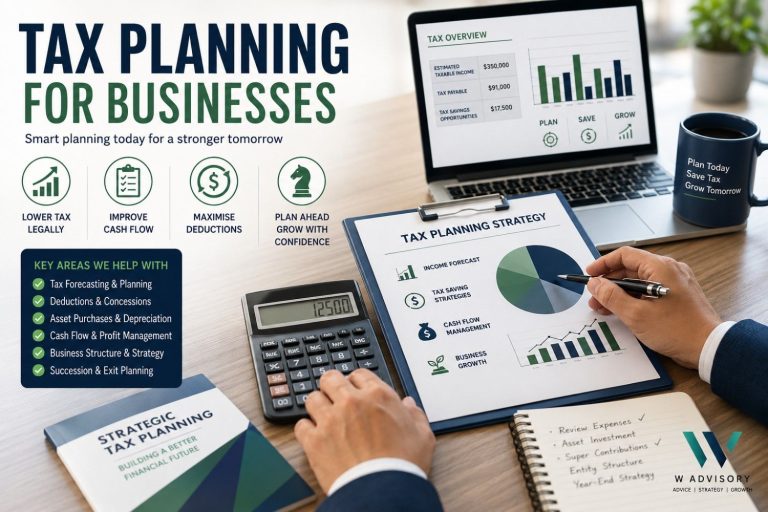
Tax-Planning-for-Businesses

Tax Planning for Businesses

Tax planning for businesses is not simply about finding deductions shortly before the end of the financial year. It is an ongoing process of understanding your financial position, forecasting future tax obligations and making informed business decisions at the right time. Effective business tax planning can help you manage cash flow, avoid unexpected liabilities and …

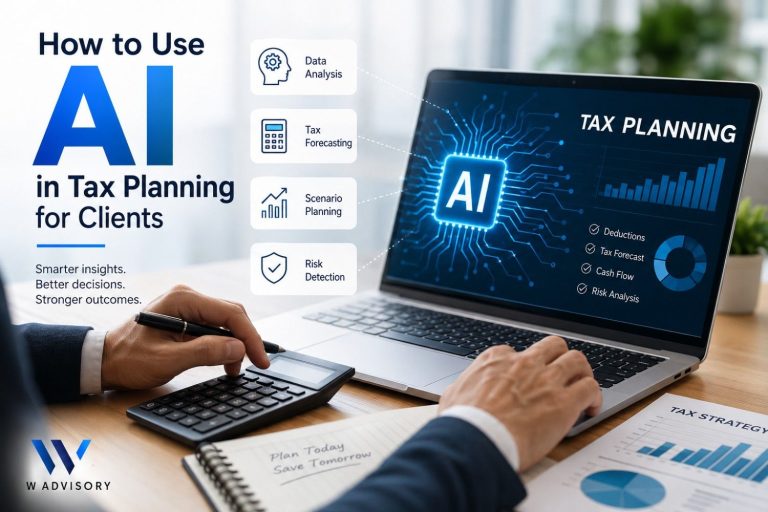
How-to-Use-AI-in-Tax-Planning-for-Clients

How to Use AI in Tax Planning for Clients

Artificial intelligence is changing how businesses analyse financial information, forecast tax obligations and prepare for important decisions. For accountants and advisers, AI can reduce repetitive work, identify patterns across large datasets and support more proactive conversations with clients. However, effective tax planning is not simply a matter of entering financial information into an AI tool …

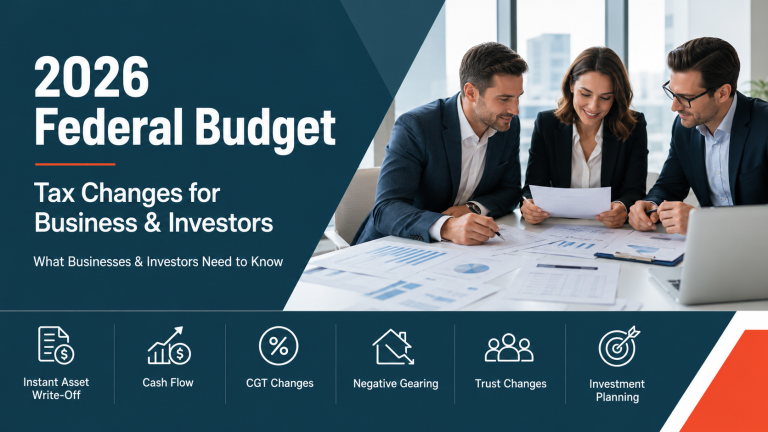
2026 Federal Budget tax changes

2026 Federal Budget Tax Changes Explained for Businesses and Investors

The 2026 Australian Federal Budget introduced a wide range of tax measures that may affect businesses, investors, property owners, sole traders, start-ups, family groups and trustees over the next few years. For business owners, the Budget includes measures designed to improve cash flow, support investment and reduce some compliance pressure. For investors, the most talked-about …

Featured Image
We will help business owners and
professionals overcome the burden of
poor tax advice, and inefficient structures

by delivering tailored strategies
that are compliant, minimise tax
and are structured to create
generational wealth.

Call Us Book Free Consultation
Seraphinite AcceleratorOptimized by Seraphinite Accelerator
Turns on site high speed to be attractive for people and search engines.